

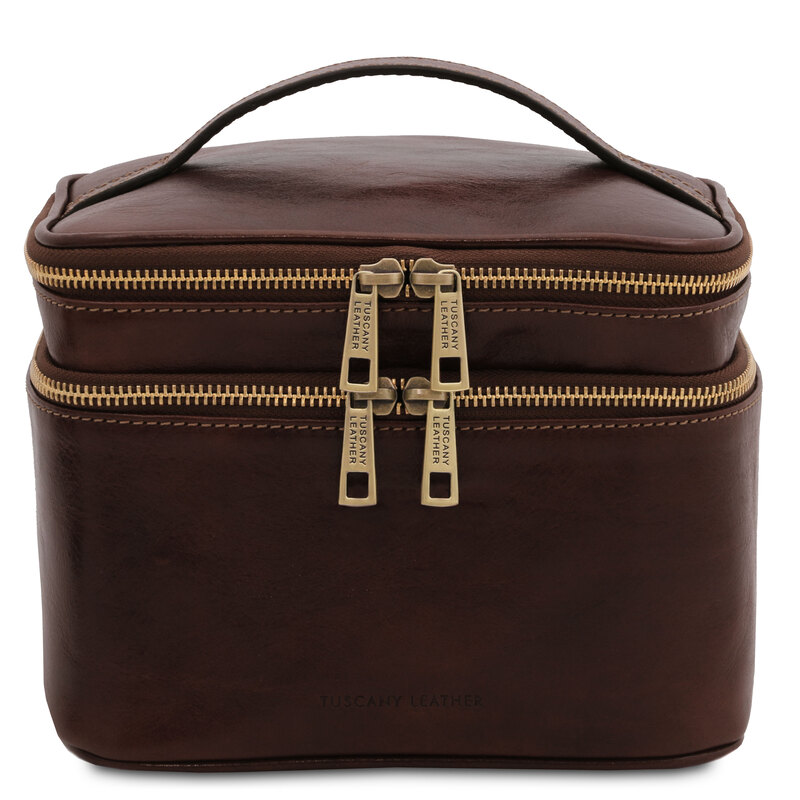
Leather or fabric is only the first question when choosing a toiletry bag. The lining, opening and cleaning instructions often matter more once bottles and grooming tools are inside. Compare complete products around your bathroom routine rather than assuming that one outer material does everything better.
Separate the outer shell from the interior
A leather exterior may give you the texture and appearance you enjoy. A fabric exterior may suit a preference for a softer or lighter design. Neither description tells you whether the interior resists a spill or how it should be cleaned.
Ask what the lining is made from and whether it is intended to be wiped, removed or washed. “Fabric” covers many materials and coatings, while leather also comes in different finishes. Read the instructions for the complete bag, not just the shell.
Compare the bottles you actually carry
Place your regular containers together and check their height and width against the usable space. A wide opening may help you see and reach the bottom. A narrow zip can be inconvenient even when the stated volume sounds generous.
Try the closure with the intended contents in place. Bottle caps should not have to force the sides apart, and the zip should close without being pulled around a rigid object. More compartments are helpful only when they suit your particular items.
Decide where the bag will live during the trip
For a dry shelf or hotel dresser, a stable base may be useful. For a small bathroom, a hanging arrangement might be preferable, provided it is part of the design and supports the loaded bag. Consider how easy it will be to open without the contents spilling out.
If you move accommodation frequently, accessible storage and a manageable packed weight may matter more than decorative details. Compare both finalists with the same contents.
Water resistance is not leak containment
Do not assume that nylon, canvas or a coated lining makes the finished bag waterproof. Seams, zip openings and the way the parts join can still allow liquid to pass. A leather shell does not guarantee protection either.
Use properly closed containers and suitable secondary packaging for products that might leak. Keep wet items separate. A toiletry bag should organise your kit; it should not be the only barrier between shampoo and your clothes.
Read the cleaning and drying instructions before buying
A fabric bag is not automatically machine washable. Its lining, coating, fittings or reinforcement may require another method. A leather bag should also be treated according to the particular finish, without assuming that a general leather cream belongs on every surface.
Check whether the inside can be reached for cleaning, especially at the base and corners. After use, empty the bag, follow its cleaning instructions and allow every part to dry before storage. Do not pack a damp cloth inside and forget it until the next journey.
Which option fits your priorities?
- Choose by appearance: compare finishes you will enjoy using rather than relying on the word luxury.
- Choose by weight: check the empty product specification; lining and fittings also contribute.
- Choose by maintenance: look for clear instructions you can realistically follow.
- Choose by access: test the opening and compartments against your containers.
Common questions
Is a leather toiletry bag suitable for travel?
It can be, if its size, interior and care requirements suit the trip. Keep liquids properly packaged regardless of the exterior.
Is fabric always the easier choice?
No. The finished construction and washing instructions matter more than the general category name.
Does the bag determine airport liquid allowances?
No. Check the current hand-luggage requirements for your departure and connecting airports separately from the choice of toiletry bag.
For the larger bag that carries your kit, read our leather and nylon duffle comparison. Explore leather toiletry bags and accessories at TUSCANY BAGS and check each model’s specification before ordering.